What Did Inspiration Feel Like? Exploring the Human Side of Scripture

I wonder what it felt like.
Not what inspiration means. We can study that. We can read the passages, trace the doctrine, argue over words and meanings.
I mean what did it feel like to be there?
To sit with a piece of parchment in front of you, ink nearby, memories stirring, and know somehow that the Holy Spirit was at work.
Jesus told the apostles that the Spirit would bring His words back to their remembrance.
I have always found that fascinating.
Memory is a strange thing even without anything miraculous happening. A sound can bring back a room. A smell can recover a face. A song can reach forty years backward and set something down in front of you as if it happened yesterday.
So what must it have been like for the apostles?
Did John sit quietly and suddenly remember the light in the room?
Did he remember the sound of Jesus’ voice?
Did he remember the dust on the road, the press of the crowd, the fear in the upper room, the sound of water as Jesus washed their feet?
Did those memories come slowly?
Or did they come all at once?
We are not told.
That may be important.
The Bible does not usually describe inspiration as men becoming empty shells while God moved their hands like someone controlling a pen from above.
Their personalities remain.
Paul still sounds like Paul.
He argues. He explains. He circles back. He becomes passionate. Sometimes you can almost hear him leaning forward over the page.
John is different.
He writes about light, life, truth, love.
Simple words.
Bottomless meaning.
Luke tells us he investigated things carefully. He gathered information. He organized it. He set out to write an orderly account.
Mark moves quickly. One event follows another as if there is no time to waste.
James gets practical.
Do this.
Live this.
Show me your faith by what you do.
The Spirit did not erase the writers.
He worked through them.
That may be the part that fascinates me most.
Their memories mattered.
Their experiences mattered.
Their vocabulary mattered.
Their personalities mattered.
Peter described men of God as being carried along by the Holy Spirit.
I like that picture.
Not dragged.
Not erased.
Carried.
Like a boat with a sail.
The sailor is still there.
The boat is still real.
The rudder still matters.
But something greater than the sailor is moving it forward.
Maybe that is what it was like.
Maybe Matthew sat down thinking about one event and found another memory rising beside it.
Maybe Mark heard Peter’s voice again.
Maybe Luke worked through testimony and records, arranging details carefully, never realizing at first how far those words would travel.
Maybe Paul sat down to address a problem in a church and found himself writing words that would still be read two thousand years later.
Love is patient.
The dead will be raised.
Walk by faith.
Put on the whole armor of God.
Words written to real people in real places that somehow kept moving long after the ink dried.
I wonder if there was ever a moment when one of them stopped.
Pen hovering.
Heart pounding.
And thought:
This is more than remembering.
We cannot know.
Scripture does not tell us what inspiration felt like from inside the room.
Maybe sometimes it was dramatic.
Pentecost certainly was.
Wind.
Fire.
Languages.
Power.
But perhaps writing was different.
Maybe sometimes the Spirit came like fire.
Maybe sometimes like wind.
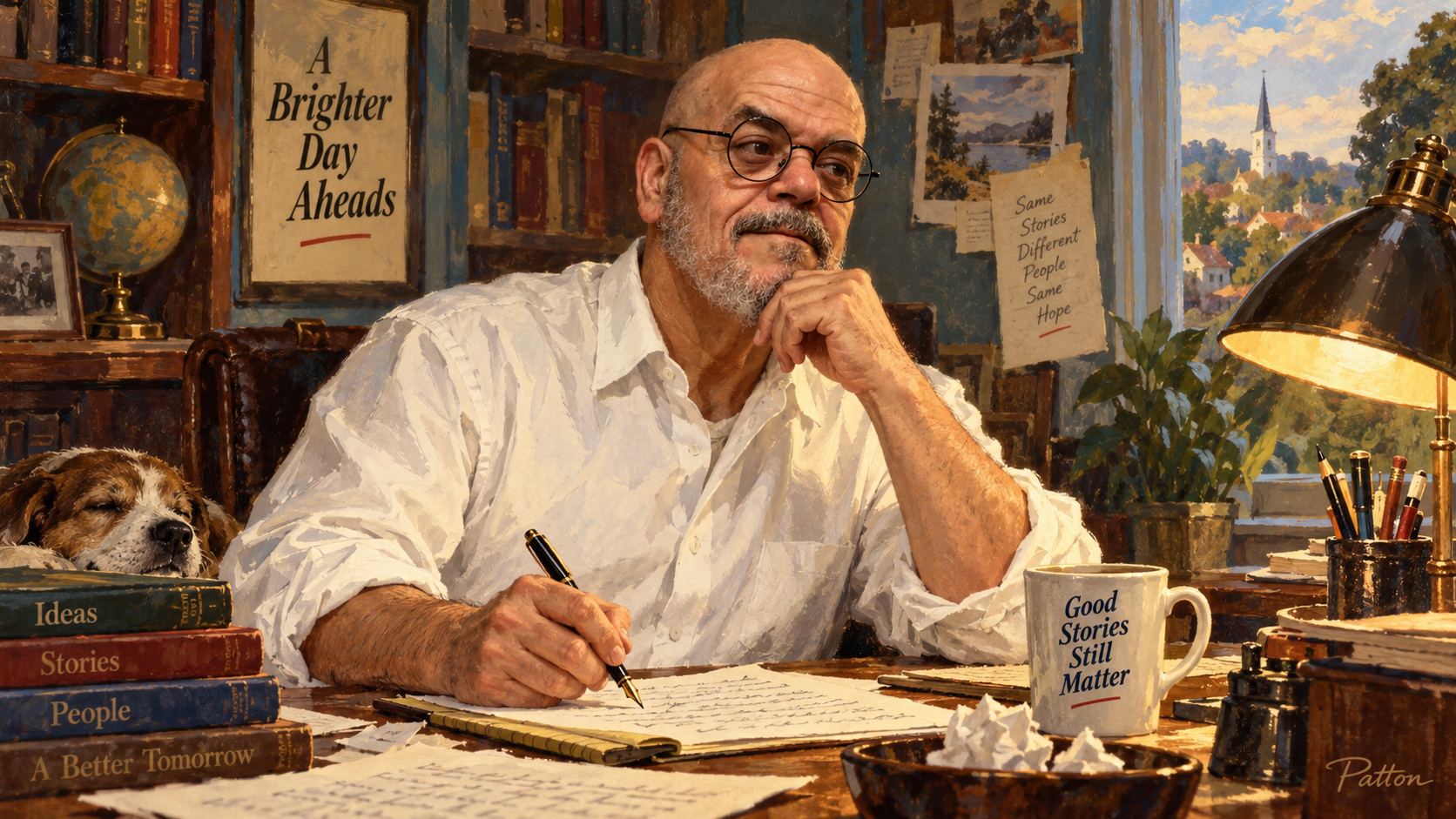
And maybe sometimes He came quietly enough that a man simply sat at a table, dipped his pen into the ink, remembered the voice of Jesus, and kept writing.
That thought stays with me.
Because the words did keep moving.
Across cities.
Across kingdoms.
Across languages.
Across centuries.
Across distance.
Until one day they reached me.