
It is coming up on three years since this health journey arrived and moved into my life without asking permission.
Since then, I have made changes. I have tried to remain consistent. I have eaten differently, moved more, taken the pills, worn the mask, kept the appointments, endured the scans, and learned more about my own machinery than I ever wanted to know.
Still, I am Braxton.
There are days when I must force myself into compliance. Some days I am successful. Other days, less so. I would love to tell you that after three years, every healthy choice has become effortless, every habit is permanently fastened into place, and I now rise each morning glowing with discipline and nutritional virtue.
That would be a lie.
Some mornings I rise with determination. Other mornings, determination has apparently called in sick.
Monday brings more cardiology appointments. The following week brings more cancer scans.
The scans never really stop.
You move along. Life begins happening again. You work, write, drink coffee, go to church, talk with family, plan for tomorrow, and become involved in the ordinary business of living. Then the phone rings.
A reminder.
Another appointment.
Another scan.
Another look beneath the hood.
It is not abnormal anymore, but it is not the old normal either. It is the new normal, and the strange thing about the new normal is that it never becomes completely normal.
I would love to say it does not bother me.
Unfortunately, that is not true either.
Remission is a wonderful word to hear when you have been hanging from the edge of a cliff with your fingers dug into the dirt, feeling your grip weaken and thinking, So this is it.
Then someone reaches down and says:
“Remission.”
That word gives you a place to breathe. It allows you to climb out of the hole, straighten your back, fill your lungs, and stand again.
But later, perhaps in the middle of the night or during the quiet part of a busy day, the word returns.
Remission.
The mind can play dirty with that word. It can make remission sound temporary, almost like a hiatus.
An intermission.
The lights have dimmed, the curtain has closed, and somewhere in the back of your mind, you begin waiting for the next act.
But remission is not intermission.
I need to remember that.
Remission does not mean the illness always comes back. It does not mean the curtain is waiting to rise again. It means the disease has retreated. It means I have solid ground beneath my feet today.
Today matters.
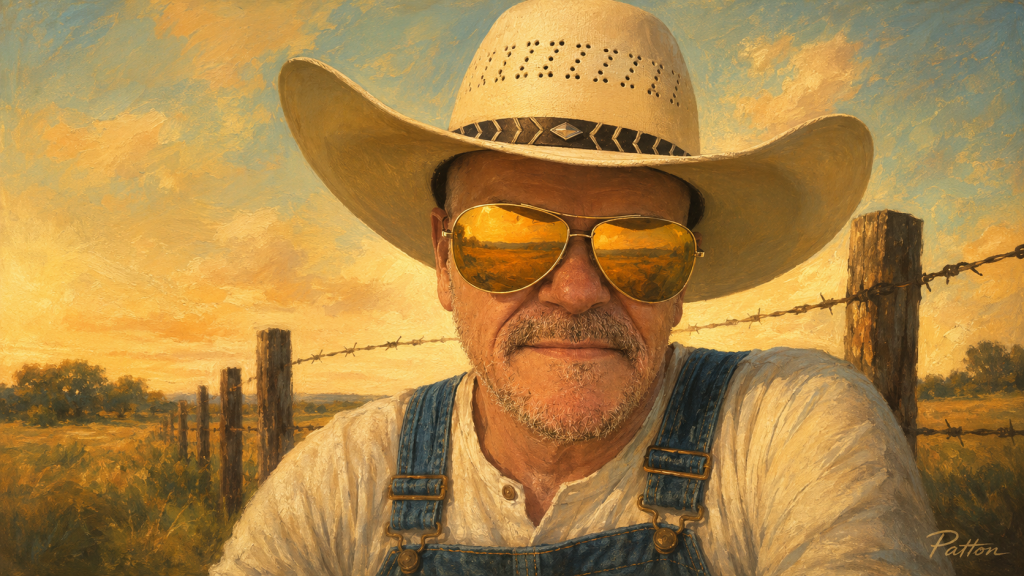
Perhaps that is why I found myself thinking about an old fence.
A few of the T-posts were leaning. They were not down, but they were no longer standing straight. The barbed wire had loosened and sagged in places.
The fence was still there. It simply needed attention.
I grabbed a crowbar and tried to straighten one of the posts. I pushed, pulled, grunted, and worked at it. Nothing much happened.
I selected a hammer and pounded away.
Still nothing.
Frustration began building. I was putting in the effort. I had the determination. I had chosen a tool, and that tool was clearly failing to appreciate my enthusiasm.
Then I remembered something.
I had a brand-new T-post driver in the garage.
Now we were getting somewhere.
I retrieved the driver and went back to work. The new tool helped, but the post continued to lean.
I stopped and studied it.
The problem was not the post itself. The earth around it had hardened in the wrong position.
So I grabbed a shovel. I loosened the soil around the post, stood it upright, braced it, and filled the hole back in.
That was better.
I moved along the fence line, digging, straightening, bracing, and refilling. Before long, the posts were standing again.
Then I took the post driver and gave one a few more blows.
It leaned.
Frustration came roaring back.
I had done what needed to be done. I had used the right tool. I had loosened the soil, straightened the post, and packed the earth firmly around it.
Why was it leaning again?
Then I realized what I had forgotten.
I had forgotten to wait.
I wanted the job finished. I wanted the ground to hold because I had completed my part of the work. But I had disturbed the earth. It needed time to settle around the post. It needed time to tighten and take hold.
Healing is not only labor.
Healing is labor followed by patience.
All that work left me tired, and tiredness has a way of making a man wonder why he bothered in the first place.
I loaded the tools into the back of the truck and headed home. I carried them to the shed, went inside, ate something, and drank some water.
Yes, I occasionally allow water into my life. Let the record reflect this remarkable development.
Afterward, I went to bed.
The noise of the day replayed in my head while I stared at the ceiling. I tossed and turned, feeling as though I had forgotten something.
Then came a knock at the door inside my mind.
I opened it with enthusiasm and perhaps a trace of irritation.
Standing there were my prescription bottles, my Bible, and my CPAP mask.
“Hey, bud,” they seemed to say. “Did you forget something?”
(I glance over my left shoulder at the reader.)
These things are not minor.
I simply forgot about them.
Sometimes I become so consumed by the large work that I forget the not-so-little things that help keep me standing. Medicine becomes routine. The mask becomes routine. Prayer becomes routine.
Familiarity can disguise importance.
I turned on the lamp, picked up the bottles, and took my medication. Then I opened my Bible to Psalm 77:10–14:
“And I said, ‘This is my anguish;
But I will remember the years of the right hand of the Most High.’
I will remember the works of the LORD;
Surely I will remember Your wonders of old.
I will also meditate on all Your work,
And talk of Your deeds.
Your way, O God, is in the sanctuary;
Who is so great a God as our God?
You are the God who does wonders;
You have declared Your strength among the peoples.”
The passage does not deny anguish.
It names it.
Then it remembers.
That may be one of the great disciplines of faith. Not pretending the pain never happened, but refusing to let pain become the only thing remembered.
I turned on the CPAP, placed the mask over my face, tightened it, shifted it until it sat correctly, and lay back.
Then the prayers began.
I remembered those who needed remembering. I prayed for family, friends, the hurting, the tired, and those carrying things they had not yet found words to describe.
Then, before I finished, there was myself.
I prayed for myself.
Somewhere in the middle of that prayer, I faded into sleep.
In the morning, I woke, removed the mask, and thought, It starts again.
I completed my little routine and headed to the kitchen to make coffee.
“Hey,” came the reminder from somewhere in the house, “do not forget to take the pills.”
After breakfast and after clearing away my mess, I returned to the shed, gathered the tools, and headed back to the fence line.
When I arrived, the posts were standing.
A couple had shifted slightly, but they had not fallen. I reinforced the places that needed attention.
Then came the urge to keep working.
To dig around each post again.
To straighten what was already straight.
To pound what was already holding.
I had to restrain myself.
This may be the hardest part of rebuilding: not trying to fix what is not broken.
Fear tells us to keep digging. It tells us that if we stop inspecting, adjusting, and testing, everything may collapse.
But too much digging can loosen the earth that has finally begun to settle.
Some things need my hand.
Others need me to take my hands off them.
I must take the medicine. I must attend the appointments. I must wear the mask, eat the food, drink the water, move my body, pray, rest, and do the work that belongs to me.
But I cannot live every quiet day as though it is merely the pause before another disaster.
Remission is not intermission.
The fence is standing today.
The earth is holding.
A post may lean now and then. A section of wire may need tightening. There will be more appointments, more reminders, more scans, and more moments when the old fear knocks at the door.
But the ground beneath me is not imaginary.
It is here.
I have done the work. I continue to do the work.
Now I must also learn to wait.
I must allow the earth time to heal around the posts.
And when morning comes, I will drink the coffee, take the pills, gather the tools, and return to the fence line.
Not because everything is falling.
Because I am still here to tend it.