Dealing with health issues, heart attack, abdominal aortic repair, lung removal, and chemotherapy, I got to where I didn’t trust anything that tasted good. If it had flavor, I figured it was trying to kill me. So, I went the other direction hard. Bitter greens, strange powders, drinks that looked like something you’d clean an engine with. I stood in my own kitchen some mornings staring at a glass of green sludge, thinking, This is either going to help me or finish the job. But I drank it anyway. Because when your body turns on you, you start grabbing for anything that feels like a weapon.
I’ve eaten enough kale to qualify as a grazing animal. Did it heal me? No. Kale didn’t heal me, God did. But apparently, He still expected me to pick up the fork. And that was the deal, whether I liked it or not. No lightning bolt. No moment where everything just snapped back into place. It was slower than that. Quieter, more stubborn. It was showing up when I didn’t feel like it. Eating when nothing tasted right. Moving when my body argued back. Getting up again after procedures that felt like they took something permanent with them.
I went through a double bypass. Lost a lung. Sat through chemotherapy while time stretched out in ways I didn’t know it could. They found an abdominal aortic aneurysm, more than one, because apparently one wasn’t enough to make the point. Every step of it felt like trying to push me out of the story.
But I didn’t go.
Not because I was the toughest man in the room. Not because I had it all figured out. I stayed, because something in me, call it faith, call it stubbornness, call it refusal, wouldn’t let go. Every day after that, it came back to the same simple thing.
“Pick up the fork. Take the step. Do the part that’s mine.”
The chemo chair isn’t dramatic. That’s the first lie it tells you. It looks harmless, recliner, blanket if you want it. People are sitting quietly, like they’re waiting on a delayed flight.
Sit in it long enough, and you realize this is where the fight happens.
The clinician hooks you up like it’s routine, and for them, it is. That part doesn’t bother me. What gets you is how normal it all feels while something not normal at all is about to start dripping into your body.
I looked at that bag more than I should have. Clear liquid, no color, no warning, just a slow, steady drip. You start measuring time in drops whether you mean to or not. Each one a question mark.
That first time, you don’t know what’s coming, not really. People tell you, pamphlets tell you. You already know this, your body doesn’t read pamphlets.
And then it hits. Not all at once. That would almost be easier. It creeps in, a heaviness, a fog. It is like your body’s trying to decide whether to fight or just shut the lights off for a while.
You sit there and try to stay present, but your mind wanders into places you don’t want it to go. Am I going to die? Is life over? You start doing math you never signed up for. (I failed college Algebra twice. You really didn’t need to know that.) How many sessions? How much time? What if it doesn’t work? What if? What if?
Here’s the part nobody explains right. You don’t feel brave in that chair; you feel vulnerable and exposed, like everything that makes you you is being tested without your permission.
I remember sitting there thinking about family, life choices, then, so this is what it comes down to. No big speeches, no plans. Just this. Sitting still while something strong enough to save you is also strong enough to break you. There’s no way around it, no shortcut, no substitute. Just one choice.
“Stay.”
So I stayed, even when I didn’t want to, especially then, because by that point I understood something I hadn’t before.
Strength isn’t loud. It’s not a moment. It’s a decision you keep making in places like that chair.
“Pick up the fork. Sit in the chair. Do the part that’s mine.”
People think the hard part is over when you leave the building. Like the fight stays in that chair, in that room, hooked to that IV. It doesn’t. It follows you home.
It follows you home, not in some dramatic way. No sirens, no warning lights. Just a kind of quiet that settles in your bones. A fatigue that doesn’t feel like being tired; it feels like your body turned the dimmer switch all the way down and forgot where it left it.
Clinicians tell you to rest, and you should. A lot of people go home, crawl into bed, and that’s the day. Sometimes the next day as well. There’s no shame in that, that’s real.
Here’s the part people misunderstand. Getting through it isn’t always about what you can’t do. Sometimes it’s about what you decide you still will do.
I went home, felt that weight settle in, same as anyone would. Every part of my being said, shut it down. You’ve earned it, and maybe I had. But I didn’t stay there. Not because I was stronger, or because I was built different. I just made a call, quiet, same as in that chair.
“Keep moving.”
I went back to work a couple days later, not full strength, not even close. I was slower, maybe a bit thinner. Tired in a way that doesn’t show up on the outside. But I showed up.
That’s the part people miss when they talk about survival. It’s not one big moment. It’s a hundred small decisions that don’t look like much from the outside. Get up, go in, do what you can. Then do it again tomorrow.
Some days you win. Some days you just don’t quit. In the end, that’s closer to what this really is. Not a comeback story. More like a long, stubborn refusal to leave.
Pick up the fork. Sit in the chair. Stand up. Go home.
Now here’s where I take off the patient hat for a minute and put on the educator one, because I’ve spent years on the other side of this conversation, and I can tell you exactly where we get it wrong.
We wait.
We wait for the medication to fix it. We wait for the procedure to carry the weight. We wait for the doctor to solve something that was never theirs to solve alone.
I get it. When you’re worn down, when you’re scared, when your body doesn’t feel like your own anymore, waiting feels like the only thing you’ve got left, but it’s not.
The treatment is part of the fight, a necessary part, sometimes the biggest part. It isn’t the only part. Your part doesn’t go away just because things got serious. It gets smaller some days, harder most days, but it’s still there.
It’s in the choices that don’t look heroic, what you eat when nothing sounds good. Whether you move when your body says don’t.
Whether you show up, physically, mentally, and spiritually, when it would be easier to check out.
Hear me clearly; this isn’t about guilt. This isn’t about blaming people for being sick. That’s not what this is. This is about ownership. The kind that says, I may not control what hit me, but I still have a say in how I meet it.
I sat in that chair. I felt that fatigue. I knew exactly how easy it would’ve been to hand the whole thing over and say, you handle it. That’s not how you get through this. You meet it halfway. Sometimes crawling, sometimes standing, but always choosing.
Pick up the fork. Sit in the chair. Stand up. Go home.
Then decide, again, what your part is today.
Let me say this plainly, because I’ve seen this from both sides of the room. Survival medicine is not a passenger system. It’s not something you sit inside while other people drive you to the finish line.
Yes, modern medicine is powerful. Life-saving, even. I’m standing here because of it. I don’t argue that for a second, but it is not the whole job.
But the mistake people make is believing that once the diagnosis shows up, their role shrinks to compliance. Take a pill, show up, follow instructions, and wait for results.
You hope that’s enough. Sometimes it is, sometimes it isn’t. Either way, there’s still you.
I tell patients this now in different words than I used to think of myself, but the meaning is the same.
You are not being asked to cure yourself. You are being asked not to disappear inside the process. It looks different depending on the day. Some days it’s walking when you’d rather not move; some days it’s eating when nothing tastes right.
Some days it’s simply deciding you’re still part of your own life, even when your body feels like it belongs to someone else.
Here’s what I learned the hard way. Small actions matter more than people think. Not because they are heroic, but because they are continuity.
This will keep you connected to yourself while everything else is trying to make you feel like a case file.
So when I say “pick up the fork,” I’m not talking about nutrition, I’m talking about participation. Stay engaged in your own survival, even at a reduced level. Even on days when that level feels almost invisible. That’s the part nobody can prescribe for you, and nobody can take away from you either.
Let me talk to you for a second, “just you and me.”
I know you’re tired. I can see it before you even say it; that kind of tiredness will not fix itself with a nap. It sits in your bones and makes everything feel heavier than it should.
I need you to hear something clearly, because people don’t always say this well in hospitals. You are not just a patient in this bed; you’re still part of this. I don’t care how many wires are going in, how many bags are hanging, how many people have names for what’s happening to you, you’re still in it with us.
Now, I’m not going to tell you this is easy. It’s not. You already know that, and I’m not going to tell you to “stay positive” like that fixes anything. That’s not how bodies work, but I am going to tell you something I’ve learned watching people go through this and going through it myself.
There’s a point where your job isn’t to fix everything. It’s just to stay engaged with your own life. Even if it’s small. Even if it’s just deciding to eat something when nothing sounds good. Even if it’s just sitting up when everything in you wants to disappear into the mattress. Even if it’s just saying, “Yeah… I’m still here.”
That matters more than people think, because the easy thing, honestly, the natural thing, is to let everything become about the illness. The schedule. The treatment. The numbers. And before you know it, you’re not you anymore. You’re just a case someone is managing.
But you’re still here.
So I’m going to tell you what I tell people in different words now, but it means the same thing. Don’t drop out of your own story. You don’t have to run it, you don’t have to control it.
But stay in it.
Pick up the fork when you can, sit up when you can. Do the small thing that says, “I’m still participating in this.” And on the days you can’t, we adjust. We don’t quit, we adjust and keep going.
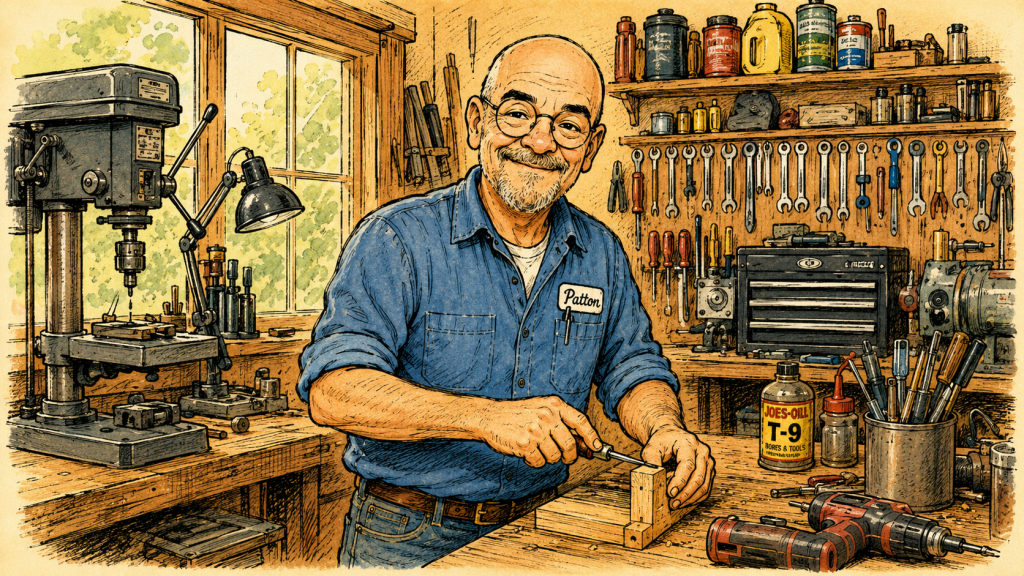
The Workbench is my way of dealing with issues, false claims, and hopefully, if you need it, helping you see how to navigate through all of this as I did. Oh, and make no mistake: I do not have all the answers and never will.
I read journals, and test claims, and never take the word of anyone online. Yeah, always double-check anything I say as well.
Before I forget, Welcome to the Workbench.